
BBQSort
WhaleSoulTrivia
4.810.00 Reviews
- Version
- 1.1.4
- Installs
- 1.00M
- Age Rating
- Everyone
Screenshots


Our Review of BBQSort
 Analysis by Appyee
BBQSort is the kind of trivia puzzle I can open for a short break without needing to learn a complicated control scheme first. Its central idea is easy to understand: arrange barbecue-themed items through sorting challenges, then keep improving as the puzzles become more demanding. That simple setup gives WhaleSoul’s game an approachable personality, especially for players who like visual organization tasks more than fast action.
I spent time looking at what makes the experience work beyond its cheerful theme. The important question is not whether the first puzzles are easy; most sorting games can achieve that. The more useful question is whether the game gives me a reason to continue after I understand the basic move. In my experience, BBQSort is strongest when I treat each level as a small planning exercise rather than something to rush through. It is free, rated for Everyone, and listed in the trivia category, although its practical appeal is much closer to a casual sorting puzzle than to a conventional question-and-answer quiz.
How the first goals make the game approachable
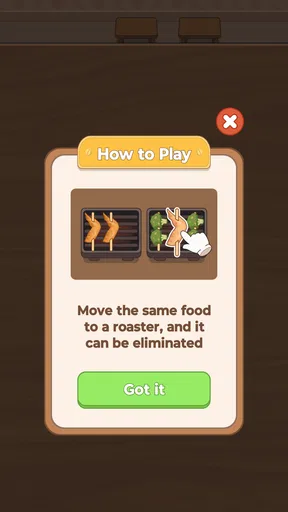
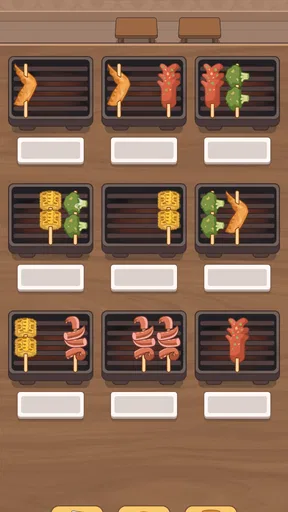
The opening objective is immediately readable: bring the mixed barbecue elements into the right arrangement. I do not need a long explanation to understand what success should look like. That matters on a phone, where a game competing with messages, music, and other distractions has only a few seconds to make its purpose clear.
The barbecue presentation also gives the sorting task a distinct identity. Without that theme, the same basic activity could feel like moving colored pieces around an empty board. Here, the grill setting makes the objects feel connected, and the visual context helps me remember what I am trying to organize. It is a small design choice, but it gives the game more character than a completely abstract sorting exercise.
My early goal is not simply to finish a stage. I am also learning how much planning the board expects from me. A move that looks helpful at first can leave an awkward space later, so I quickly start checking the available destinations before committing. That creates a gentle introduction to forward thinking. The game does not need complicated rules to teach that habit; the board itself provides the lesson.
For a new player, I would recommend resisting the urge to move pieces randomly just because the first arrangement seems forgiving. The better workflow is to identify the item or group that is closest to a useful position, then consider whether moving it will block the next step. This approach makes the early stages more satisfying and prepares me for the points where the layout stops being obvious.
That said, players searching for a deep trivia database may misunderstand the category label. BBQSort does not appeal to me because it tests facts about food, grilling, or general knowledge. Its attraction comes from visual logic and the pleasure of cleaning up a messy arrangement. If you want questions with multiple-choice answers, a traditional trivia app will be a better fit. If you enjoy sorting objects into order, the presentation here is much more relevant.
What progress feels like during ordinary play
The clearest progress signal is the board becoming orderly. I can see whether my decisions are reducing the confusion or merely shifting it around. That visual feedback is more useful than a decorative reward because it tells me immediately whether my current plan is working.
There is also a satisfying change in my own approach. At first, I focus on individual pieces. After a few attempts, I begin reading the whole arrangement: which space can accept a piece, which position must remain open, and which move will create room for a later sequence. That change in perception is one of the better reasons to keep playing. The game encourages me to become more deliberate without presenting itself as a serious brain-training exercise.
I would not judge progress only by speed. A careful solution that avoids a restart can be more rewarding than a quick series of moves that leaves the board tangled. This is an important distinction for younger players and for anyone using the game to relax. The experience works best when I treat accuracy and planning as the main goals, not when I turn every stage into a race.
For parents considering an Everyone-rated game, the accessible theme and straightforward objective make it easy to understand what a child is doing. I would still play alongside a younger child at first, not because the basic concept is difficult, but because discussing possible moves can turn a solitary puzzle into a useful shared activity. The game offers a natural way to talk about order, consequences, and patience.
Unlocks, goals, and the shape of motivation
The most important limitation is that the available information does not establish a broad collection of extra systems, so I would not approach BBQSort expecting a role-playing progression track, a narrative campaign, or a large set of side activities. Its motivation comes primarily from solving the next arrangement and handling the increasing demand for planning. That focused structure can be a strength when I want a clean puzzle, but it may feel narrow if I need constant novelty.
In practical terms, the game gives me short-term goals rather than a grand long-term mission. I can aim to finish the current board, avoid unnecessary reversals, and improve my understanding of the layout. Those goals are modest, but they suit a casual mobile session. I do not have to remember a complicated story or maintain a large collection before returning later.
Players who need visible unlocks to stay engaged should think carefully before choosing this one. In a sorting game, the act of solving is often the reward, and BBQSort leans into that kind of motivation. I find it more appealing when I want a compact mental task than when I want a constant stream of new characters, equipment, or competitive rankings.
A useful personal challenge is to replay a board mentally before making the first move. I try to predict where the most constrained item should go and which open position will be valuable later. This turns a simple level into a small exercise in resource management. It is also a way to create extra depth without pretending the game has systems that are not clearly part of its design.
Difficulty, pacing, and the pressure to continue
I find the difficulty in BBQSort comes less from speed than from deciding which move keeps future options open. That makes a pause to scan the whole board more useful than tapping quickly, especially when I’m playing in short bursts around other tasks. The next section looks at how that measured pace affects the urge to keep going.
Why the difficulty curve matters here
Sorting puzzles usually live or die by their difficulty curve. If every board can be solved by moving the most obvious piece, the game becomes background activity. If the challenge jumps too sharply, the relaxed barbecue theme starts to feel misleading. BBQSort works best in the middle: the rules remain approachable, while the arrangement asks me to think one or two moves ahead.
The main source of difficulty is not fast timing. It is the possibility of creating a dead end through an apparently sensible move. That changes the rhythm of play. I can take a moment to inspect the board, test a plan, and then commit. For me, this makes the game suitable for a commute, a waiting room, or a quiet pause at home because the challenge does not depend on rapid reactions.
There is a trade-off, though. Players who enjoy action, reflexes, or constant audiovisual stimulation may find the pace too calm. The game’s appeal depends on noticing small improvements in the arrangement. If that kind of progress does not feel rewarding to you, the barbecue theme alone will not carry the experience.
When a board becomes difficult, I find it more productive to stop focusing on the item I want to place immediately. Instead, I look for the move that creates the most useful space. This is a non-obvious shift in perspective: the best move is often preparatory rather than visibly successful. It prevents me from undoing progress repeatedly and makes challenging stages feel more understandable.
How the game holds attention between sessions
BBQSort is well suited to fragmented play. I can approach it as a single-board break rather than committing to a long session. That is valuable for people who want a game that fits around daily routines. For example, if I have a few minutes before an appointment, I can examine one arrangement, make a careful plan, and stop when the task is complete instead of losing track of a long match.
The same short-session structure can also expose a retention weakness. If the game does not provide enough variation in goals or enough meaningful progression signals, I may finish a few puzzles and feel that I have seen the central idea. The sorting mechanic needs to keep presenting worthwhile decisions, not merely more boards with the same level of thought.
I would describe the retention pressure as gentle rather than aggressive. The immediate temptation is to solve “just one more” because the board is close to completion. That can be pleasant, but it is not the same as a strong long-term progression system. Players who prefer collection, competition, or story milestones may eventually move to another game, while puzzle fans may be happy to stay as long as the arrangements continue to make them think.
My best habit is to stop after a satisfying solution instead of continuing until the game feels repetitive. That keeps the experience fresh and makes it easier to return later. It also highlights what BBQSort does well: providing a small, contained challenge rather than demanding that it become the center of my gaming time.
Who should play it, and who should skip it
I would recommend BBQSort to casual puzzle players, families looking for an accessible sorting activity, and anyone who likes visual order more than trivia questions. It is especially suitable for people who enjoy planning at their own pace and want a free game that can be picked up without a lengthy tutorial. The Everyone rating reinforces its broad accessibility, while the barbecue setting gives the familiar sorting format a warmer identity.
I would skip it if my priority were factual quizzes, multiplayer competition, a story-driven campaign, or a large progression economy. I would also look elsewhere if I needed a game built around reflexes or constant action. BBQSort’s value is concentrated in the moment-to-moment puzzle: inspect, plan, move, correct, and complete.
Compared with ordinary trivia apps, it offers less knowledge testing and more spatial reasoning. Compared with match-three games, it is less about chaining quick combinations and more about preserving future options. Compared with elaborate puzzle adventures, it is lighter and easier to enter, but likely less rich in narrative context. Those comparisons help set the right expectation: this is a focused casual game, not an all-purpose entertainment package.
Practical advice for getting more from each board
I recommend scanning for bottlenecks before touching anything. A bottleneck is an item or position with very few useful destinations. Handling that constraint early can prevent a later pileup. I also try to preserve open space instead of filling every available position immediately, because empty room often gives me the flexibility needed to reorganize the rest.
Another helpful technique is to separate progress from movement. A piece moving to a different location is not automatically progress. I ask whether the move improves the final structure or merely hides the same problem somewhere else. This simple check reduces aimless tapping and makes the game feel more strategic.
When I make a mistake, I avoid rebuilding the entire plan from memory. I identify the exact move that caused the trouble, then work backward to find the last stable arrangement. That approach is faster and less frustrating than restarting mentally from the beginning. It also turns failure into information about the board’s constraints.
Finally, I would use the game as a short concentration reset rather than as a background activity while watching something else. The visual organization is where the satisfaction comes from, and splitting attention makes the puzzles feel more tedious. A few focused minutes are more rewarding than a longer session filled with careless moves.
My verdict on the progression and overall fit
WhaleSoul has built BBQSort around a clear, approachable loop: take a barbecue-themed arrangement, think through the available space, and bring it into order. The game’s early goals are easy to grasp, its progress is visible on the board, and its difficulty encourages planning without requiring quick reflexes. Those qualities make it a comfortable choice for casual play.
The progression is also intentionally limited in scope. I do not see it as a game that needs elaborate unlock trees to justify itself. Its success depends on whether the puzzles continue to offer meaningful decisions and whether the player enjoys the act of sorting. That is a fair trade-off, but it means the game will not satisfy everyone. The absence of a broader motivational structure can become noticeable for players who need constant rewards or a strong narrative reason to continue.
Its current version is 1.1.4, and the game has already passed the one-million-install mark with an average rating of 4.8 from around nine thousand ratings. Those figures suggest that the simple concept has found a sizeable audience, but they do not replace personal preference: a popular sorting game can still be the wrong choice for someone seeking traditional quizzes or action.
For me, the strongest use case is a brief, focused break. I can play it while waiting for food, between tasks, or when I want something more engaging than scrolling but less demanding than a full strategy game. The free price removes the barrier to trying it, and the minimum operating system requirement of Android 8.1 keeps it accessible on many older devices.
My recommendation is simple: choose BBQSort for calm, visual puzzle-solving, not for conventional trivia. It earns its place through readable goals, thoughtful board management, and a theme that makes sorting feel less sterile. Just keep your expectations focused. If you enjoy finding the right order and learning from a bad move, this is an easy game to recommend to a friend. If you need deep unlocks, varied modes, or rapid action, another category will serve you better.
Verdict
Strengths of BBQSort
- Quickly sorts and organizes BBQ recipes by useful categories.
- Simple interface makes browsing recipes easy for beginners.
- Helpful for planning meals around different barbecue styles.
- Recipe discovery can inspire new grilling ideas.
- Lightweight app that is easy to navigate on mobile devices.
Limitations of BBQSort
- Recipe selection may feel limited compared with larger cooking platforms.
- Some recipes may lack detailed preparation or cooking guidance.
- The app may not offer advanced meal-planning or shopping tools.
- Ingredient availability can vary depending on the user’s location.
- Users seeking grilling timers or temperature tracking may need another app.
Similar Picks in This Category
View All
Millionaire 2026 Quiz & Trivia
Quiz & Trivia Games by Submarine Apps4.5

Brain Test 2: Tricky Stories
Unico Studio4.7

Trivia Crack: Brain Quiz Games
etermax4.4

QuizzLand. Quiz & Trivia game
Quiz & Trivia Games by Mno Go Apps4.8

Brain Test: Tricky Puzzles
Unico Studio4.7

Logo Quiz
bubble quiz games4.5
Frequently Asked Questions
What is BBQSort and how does the game work?
BBQSort is a casual sorting puzzle game built around organizing barbecue-themed items. Each level challenges you to arrange, group, or move objects according to the rules shown on screen. The gameplay is generally easy to understand, but later stages may require careful planning because available spaces and moves can be limited. It is designed for short, relaxing play sessions.
Is BBQSort free to download and play?
BBQSort can generally be downloaded without an upfront payment, allowing players to try the basic gameplay for free. However, the experience may include advertisements, optional in-app purchases, or both. Purchases can sometimes provide hints, extra moves, or other conveniences. Before confirming any transaction, review the payment details and parental controls on your Android or iOS device.
Does BBQSort require an internet connection?
The main sorting puzzles in BBQSort may be playable without a constant internet connection, which makes the game suitable for travel or offline moments. Nevertheless, an internet connection may be needed for advertisements, rewards, updates, cloud-related features, or purchases. Availability can also vary by version, so it is best to test the game offline after installation.
Is BBQSort suitable for children?
BBQSort uses simple, colorful visuals and straightforward puzzle mechanics, so it may be appropriate for many casual players, including older children. However, parents should check the age rating, advertising content, and in-app purchase settings before allowing unsupervised play. Some levels may also become more challenging, and younger children could need help understanding the objectives.
Are there many levels in BBQSort, and does the difficulty increase?
BBQSort is intended to provide progressively challenging sorting puzzles rather than repeating exactly the same task. Early levels usually introduce the controls and basic rules, while later stages can add more objects, tighter space limitations, or less room for mistakes. The number of available levels and their design may change through updates, so the long-term experience can vary.
Play our best games!


